You can increase productivity without extra staff by reducing unnecessary tasks, limiting physical strain, preventing product damage, and standardizing workflows. This allows employees to spend more time on value-added activities and less time on waste.
Many manufacturing and logistics companies face the same challenge. Demand is growing, schedules are filling up, but finding extra staff is becoming increasingly difficult. The knee-jerk reaction is often to post job openings or work overtime. Yet, the solution doesn't always lie in more people. Often, there is still a lot of profit to be gained within existing processes.
The question is therefore not:
But:
In many companies, processes have evolved over the years. Production has often been expanded in stages. But what we frequently hear is that if companies could do the expansion over again, it would be ideal to have one facility and be able to redesign the production layout from scratch.
Inefficiently designed production processes often lead to tasks that once made sense but now unnecessarily consume time.
Think of:
These actions may seem small, but they sometimes occur hundreds of times a day.
When companies want to increase productivity, they often look at machines or automation. That is understandable, but a lot of the potential gain actually lies in the activities between the machines.
For example, an employee might do the following dozens or hundreds of times a day:
Every action costs time and energy.
The more often it is performed, the greater the impact on the overall process.
Physical strain reduces productivity because employees spend more energy performing tasks. This leads to increased fatigue, more errors, and a higher risk of absenteeism. Reducing physical strain often results in a faster work pace, greater consistency, and a more efficient process.
Productivity is not just about speed.
Physical strain in the workplace can lead to health issues and absenteeism. The Arboportaal therefore identifies physical overexertion as a key focus area for maintaining healthy and safe working conditions.
That is why ergonomics and productivity are often much more closely linked than people realize.
Start by observing.
How often does an employee have to bend, twist, or reach?
How many times is a product picked up before it reaches its final destination?
Small improvements in handling can save a significant amount of time on an annual basis.
When two employees are needed for a single task, a bottleneck is quickly created.
By reducing physical strain, tasks can often be performed faster and more consistently. Ergonomic aids are frequently used to limit physical strain and make the workplace safer.
Damage during internal transport or handling costs not only materials, but also time. Every repair is productive time lost.
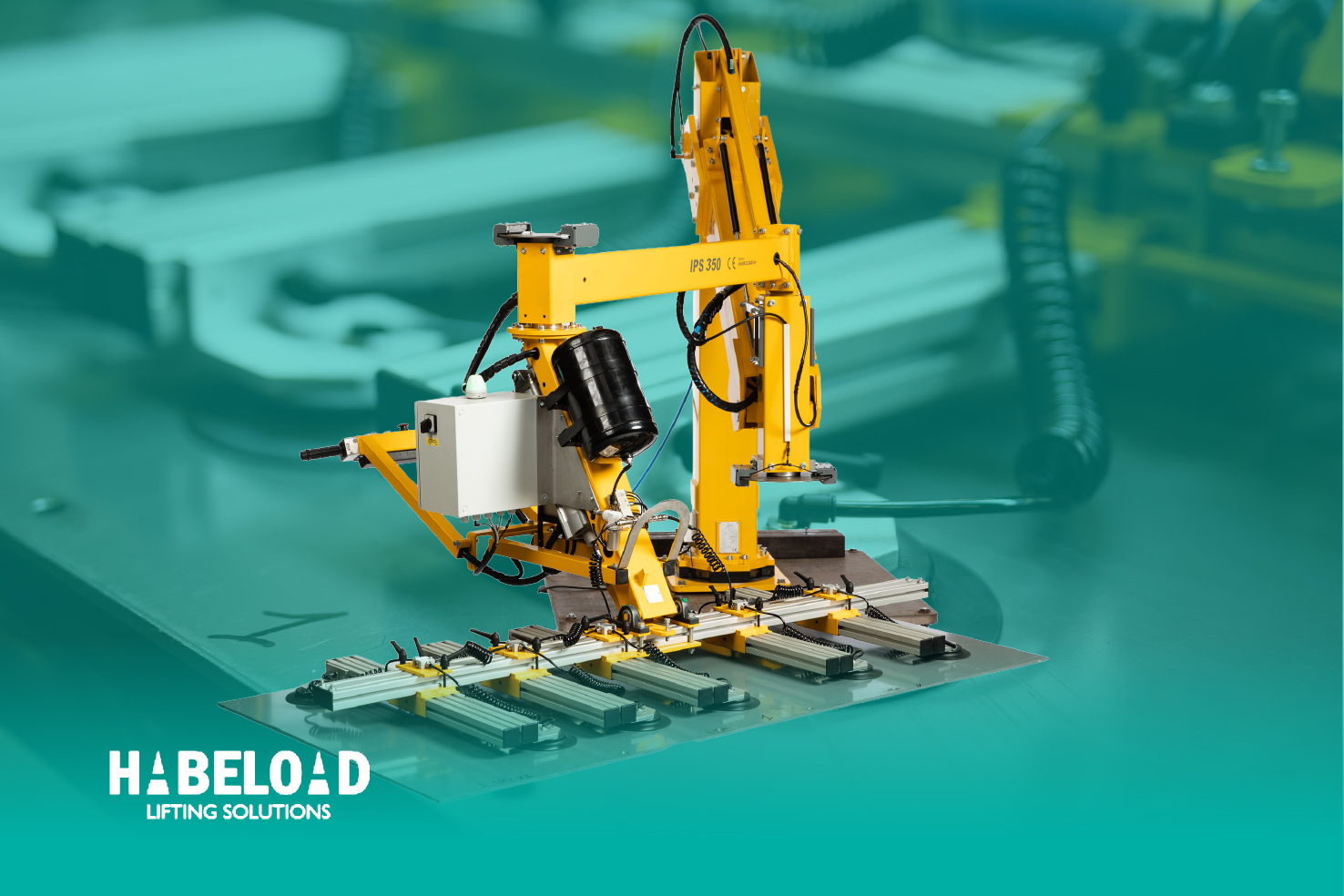
We know from experience that manually picking up a piece of glass from a machine and placing it on a rack can cause damage. When glass is moved with a manipulator, it is done in a controlled and steady manner. For this, we often use the HPL series or the IPS series.
When processes are highly dependent on individual experience, variations in execution occur.
A standardized workflow makes processes more predictable and efficient.
Suppose an employee performs a task 300 times a day.
If that task is performed just 5 seconds faster on average, it results in:
And that is for just one single task.
The greatest productivity gains often come not from one major change, but from many small improvements combined.
Producing more does not automatically mean needing more staff.
Often, the biggest gains lie in optimizing existing processes. By reducing physical strain, eliminating unnecessary steps, and organizing workstations more efficiently, organizations can increase their productivity without immediately hiring additional staff.
Especially in a labor market where technical staff is scarce, this is becoming increasingly important.
Feel free to contact us for a no-obligation consultation.



