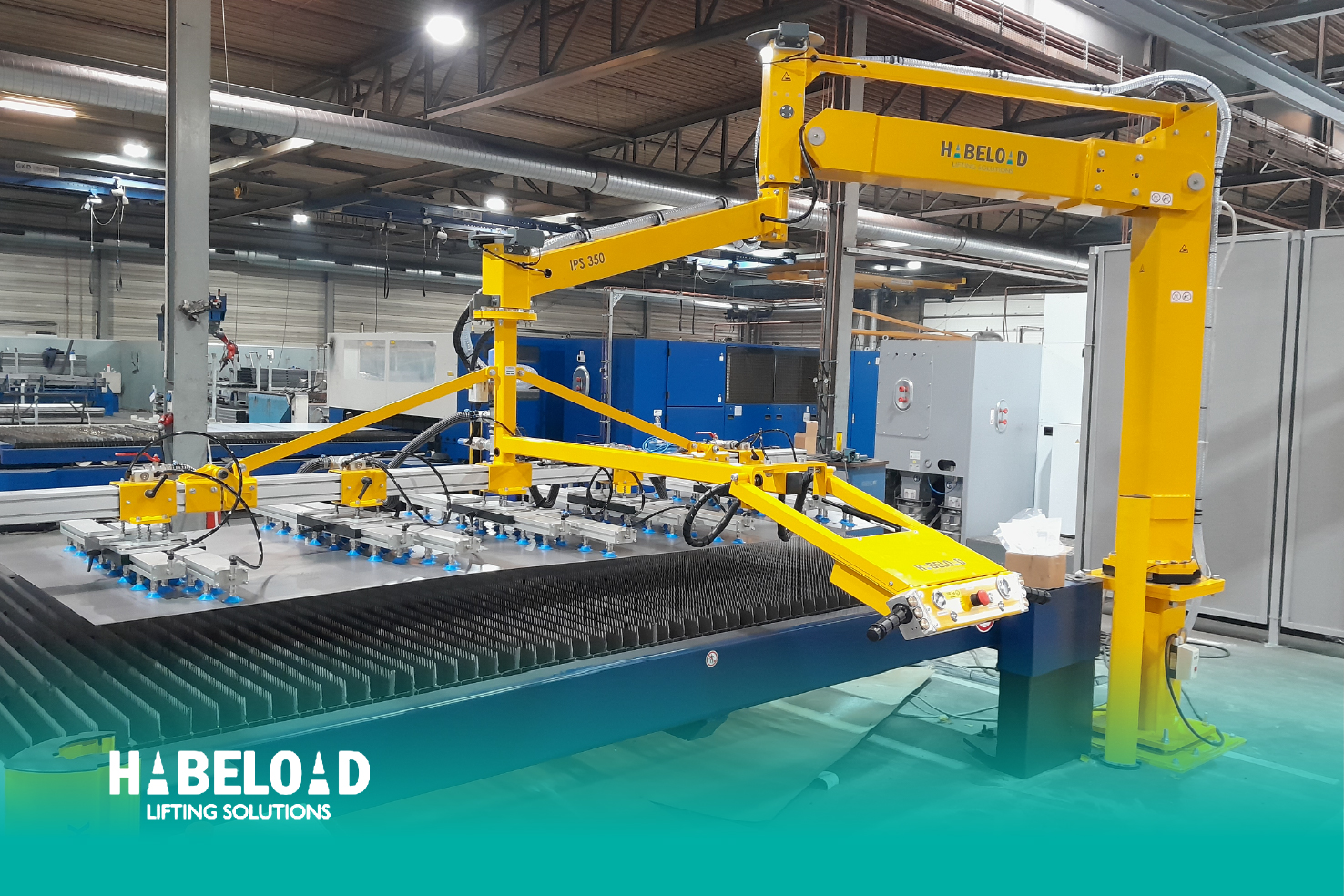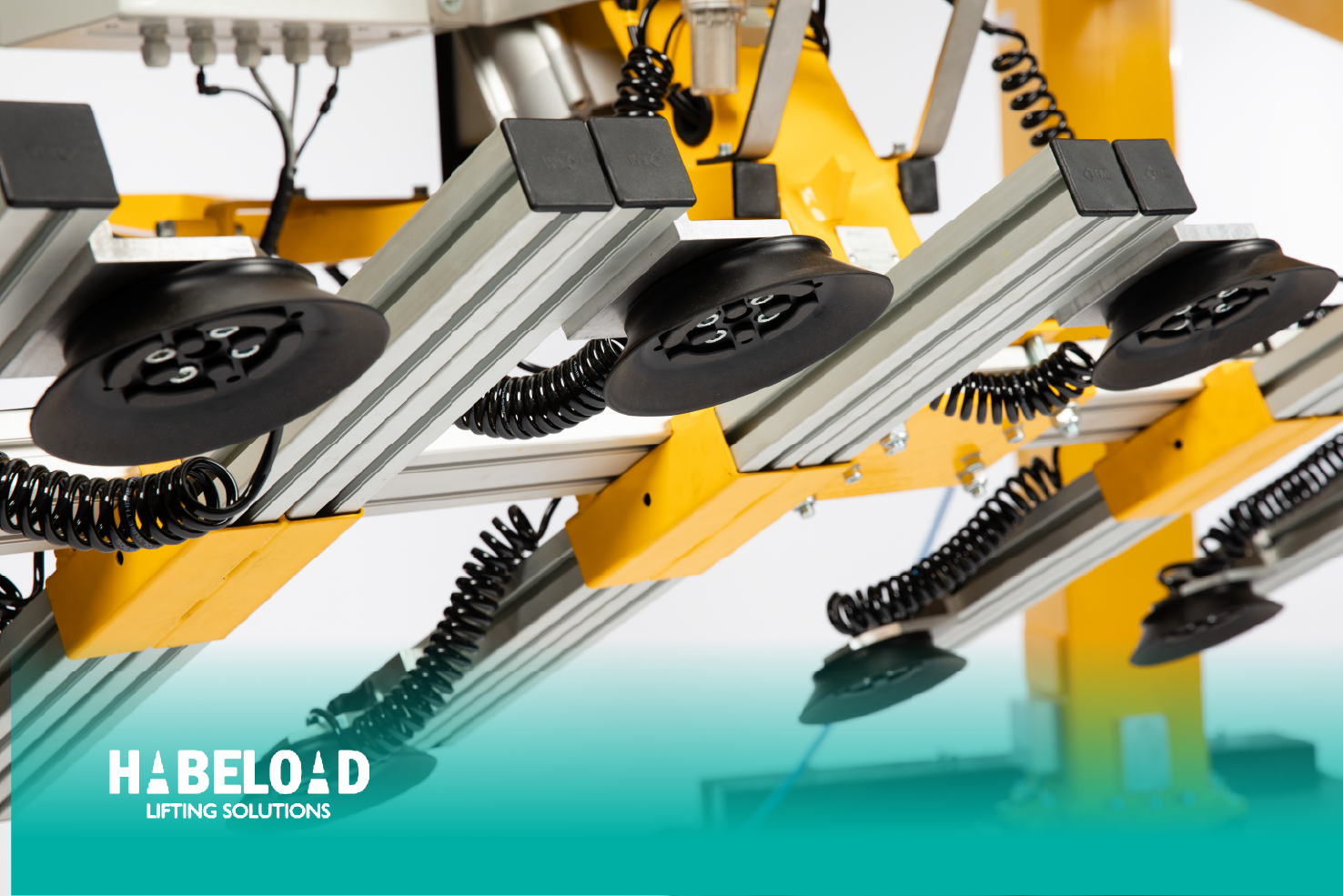
The right lifting solution depends on more than just the weight of a product. Its shape, surface, required movement, and the way it needs to be positioned all play an important role. A vacuum lifter is often suitable for flat products and repetitive tasks, while a manipulator offers more possibilities for complex shapes, heavier loads, and precise positioning.
When companies look for ways to move products more safely and efficiently, two solutions often come to mind: the vacuum lifter and the manipulator. Both systems assist employees in lifting, moving, and positioning products. Yet, the differences are greater than many people realize.
The question is therefore not:
Which solution is better?
But:
Which solution best fits my product and process?
A vacuum lifter uses negative pressure to hold and move a product.
A vacuum lifter "suctions" onto the product, allowing it to be easily lifted and moved. Vacuum lifting systems are widely used for the ergonomic handling of boxes, sheets, bags, and other products within production and logistics processes.
A manipulator assists the operator in moving and positioning loads. Unlike a vacuum lifter, a manipulator does not always rely on vacuum. Depending on the application, various grippers can be used that are specifically designed for a particular product.
Pneumatic manipulators are available for a wide range of loads and are used in industrial environments where precise and ergonomic lifting is essential.
A vacuum solution is often a good choice when:
Vacuum works best when there is sufficient contact surface area available.
Think of:
Many vacuum solutions are designed for repetitive tasks where speed plays an important role.
In logistics and packaging processes, a vacuum lifter is often an efficient solution for common handling tasks.
A manipulator is often a better choice when:
Not every product is suitable for vacuum technology.
Consider:
Manipulators often offer a high degree of control during:
For larger, heavier, or off-center loads, a manipulator often offers more possibilities. Habeload provides solutions for a wide range of weights and complex handling challenges.
Many companies look at the weight of a product first. That makes sense, but it is often not the most important criterion.
Much more relevant are questions such as:
Only when these questions have been answered does a clear picture of the right solution emerge.
The characteristics of a vacuum lifter and a manipulator differ in several ways. The comparison below helps with an initial choice.
✅ Suitable for boxes and sheets
✅ Works well on flat surfaces
✅ High operating speed
✅ Easy to use
✅ Low physical strain
⚠️ Less suitable for complex or irregular products
⚠️ Limited options for rotating and tilting
✅ Suitable for complex and irregular shapes
✅ Excellent for precise positioning
✅ Suitable for rotating and tilting products
✅ Many customization options
✅ Ideal for complex handling tasks
⚠️ Often more product-specific than a vacuum lifter
Are you prioritizing speed and working with flat products such as boxes, sheets, or glass? Then a vacuum lifter is often the best choice.
Do you work with complex products, irregular shapes, or heavy loads that require precise positioning? Then a manipulator usually offers more possibilities.
That depends on your process. A vacuum lifter can be ideal for quickly moving boxes, sheets, or packaging. A manipulator may be the better choice when products are more complex, need to be rotated, or require specific positioning.
That is why a good solution always starts with an analysis of:
Vacuum lifters and manipulators are both effective solutions for ergonomic and efficient lifting. However, they address different challenges.
Are you dealing with flat products such as boxes, sheets, or glass? Then a vacuum lifter is often a logical choice.
Do you work with complex products, heavier loads, or specific positioning requirements? Then a manipulator often offers more possibilities. The question is therefore not which technology is better, but which one best suits your application.
Would you like to determine which solution is suitable on a broader scale first? Then also read which lifting aid best suits your application.